
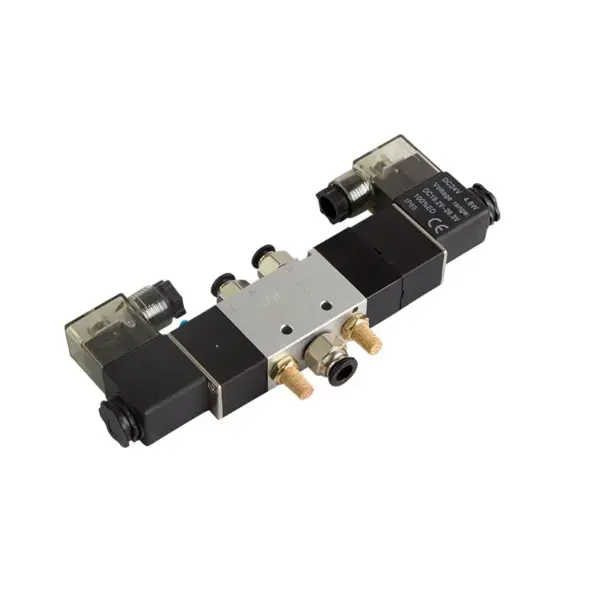
Description
Type C: Introduction to the principle of closed center
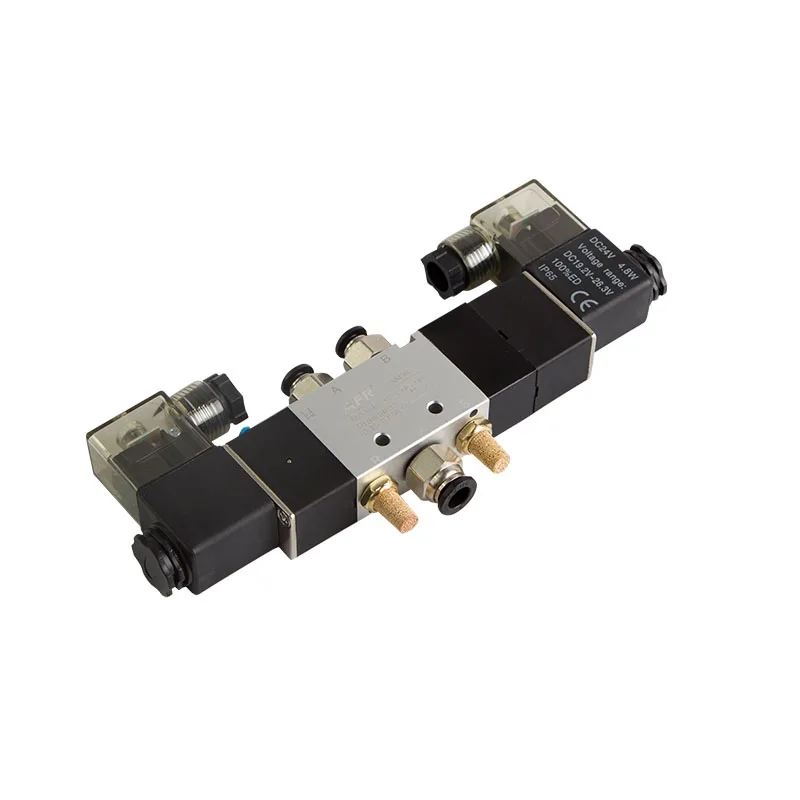
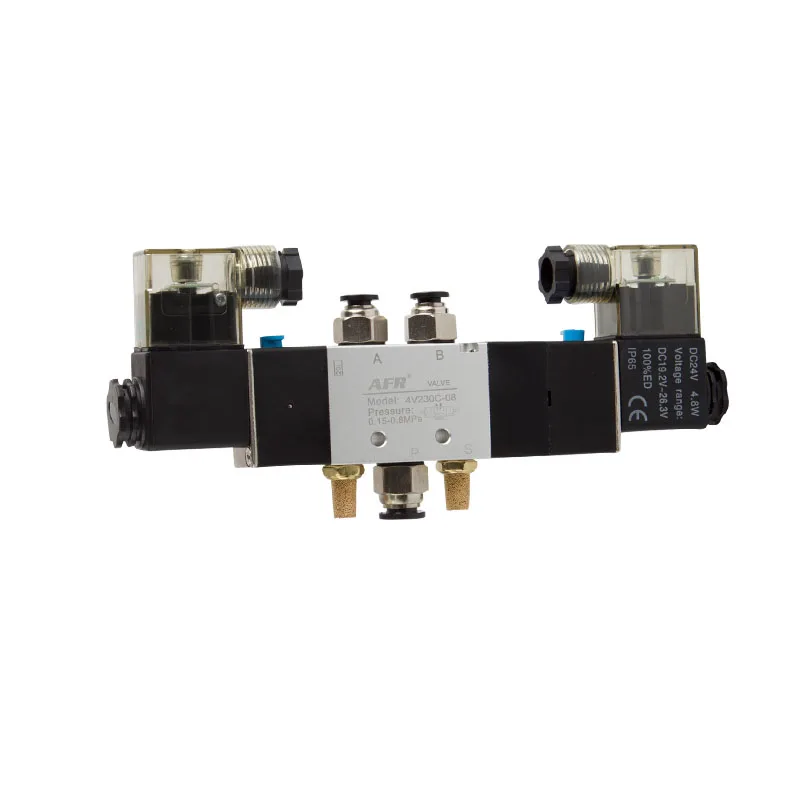
The five holes are closed without power, the cylinder cannot be stretched manually, and the left and right openings can be selected after powering on.
The left side is electrified: P hole air intake A hole, B hole exhaust S hole.
The right side is electrified: P hole air intake B hole, A hole exhaust R hole.
Type E: Introduction to the principle of neutral exhaust
When the two coils are not powered, the intake port is closed and the exhaust port is opened. The pressure on both sides of the cylinder is discharged through the two exhaust ports of the solenoid valve, and there is no pressure on both sides of the cylinder.
Compared with the mid-seal valve, this circuit can achieve a longer mid-stop. In some cases where the cylinder must move vertically, and the intermediate stop time is long but the positioning accuracy is not very high, you can consider the use of the intermediate discharge type.
Type P: Medium pressure: When the two coils are not powered, the intake port is opened and the exhaust port is closed. The pressure on both sides of the cylinder remains unchanged after the last coil is de-energized, and the pressure is continuously supplied. , So that the pressure on both sides of the cylinder is consistent with the pressure at the intake end.
If the cylinder has no axial external load force, then the piston remains balanced and can stop at the mid-stroke position with high stopping accuracy. The prerequisite for this circuit to achieve a mid-stop is that the cylinder needs to be installed horizontally. Therefore, when the cylinder is required to have higher precision positioning and can meet the working conditions of the cylinder without axial external load force, a medium pressure valve can be used in conjunction with a double piston rod cylinder.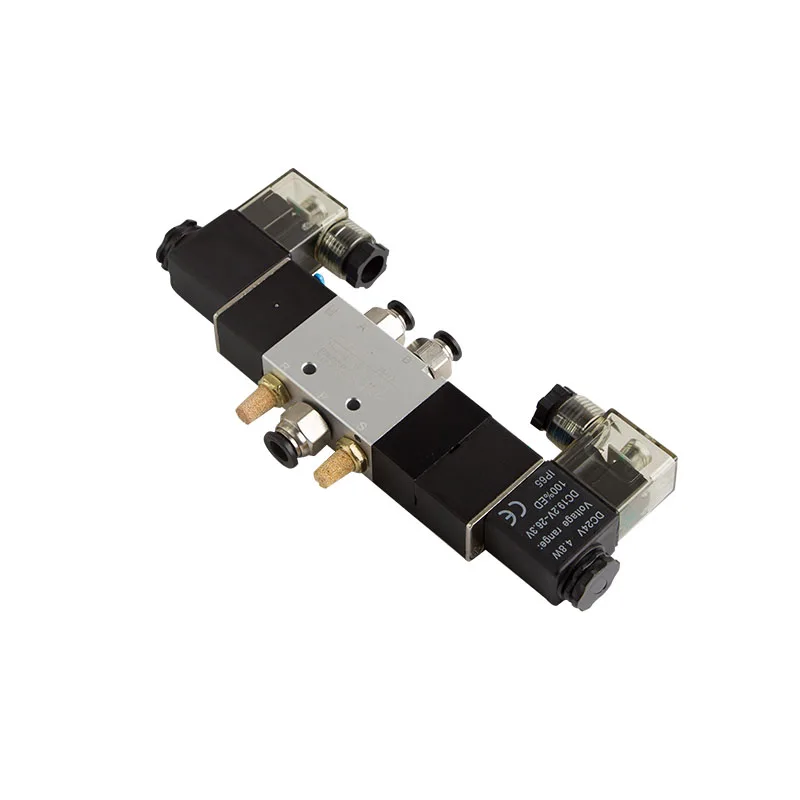
Reviews
There are no reviews yet.